
SAP RPT-1 Explained: How SAP Predicts Business Outcomes Using Structured Data
SAP-RPT-1 is SAP’s AI foundation model designed specifically for structured enterprise data. It enables businesses to make predictions directly from relational tables such as sales orders, invoices, HR records, and cost centers — without traditional machine learning training or feature engineering.
SAP-RPT-1 stands for Relational Pretrained Transformer-1.
Unlike typical large language models (LLMs) like ChatGPT that are trained on text scraped from the internet, SAP-RPT-1 is designed to understand relational enterprise datasets natively.
It speaks the language of business tables — orders, invoices, sales records, HR data, cost centers, delivery schedules — and the fields, relationships, and semantics that tie them together.
In short: SAP-RPT-1 is an AI model purpose-built to make predictions from the kind of data businesses already have.
What Does SAP-RPT-1 Do?
SAP-RPT-1 brings three core capabilities to the table:
✓ Predicts business outcomes — forecasting, classification, regression — directly on tabular data
✓ Uses in-context learning — no need to train custom models; just provide a small set of example rows and it makes predictions
✓ Works seamlessly with SAP’s ecosystem —deploy via SAP AI Foundation and the broader Generative AI on SAP BTP architecture
Why SAP-RPT-1 Matters for Enterprises
Traditional machine learning requires significant effort: data cleaning, feature engineering, model training, tuning, deployment. For many business users, this creates a barrier between “we have data” and “we can predict outcomes.”
SAP-RPT-1 removes that barrier:
✗ No traditional ML training needed — no lengthy model build cycles
✗ No feature engineering — the model understands your columns natively
✗ Enterprise-ready — handles common use cases like churn prediction, delivery delay forecasting, sales outcome estimation, and cost center classification
With as few as 500-2000 example rows, SAP-RPT-1 can often outperform traditional narrow AI models trained on millions of records. That’s the power of large-scale pre-training on relational data.
Stay Ahead in the SAP + AI Era
Join 10,521+ SAP Professionals mastering SAP AI every week. No spam. Unsubscribe anytime.
How SAP-RPT-1 Works: A Simple Enterprise Use Case
Consider a typical sales dataset inside SAP.
Each record represents a past deal, with structured fields such as deal value, industry, region, number of days open, discount applied, and the final outcome (Won: Yes or No).
Now comes the real business question:
“Will this deal close?”
SAP RPT-1 is built precisely for scenarios like this—where the answer lies in structured, table-based enterprise data rather than unstructured text.
Step 1: Your business data (just a table)
Imagine you export a CSV from SAP (Sales, CRM, S/4, whatever):
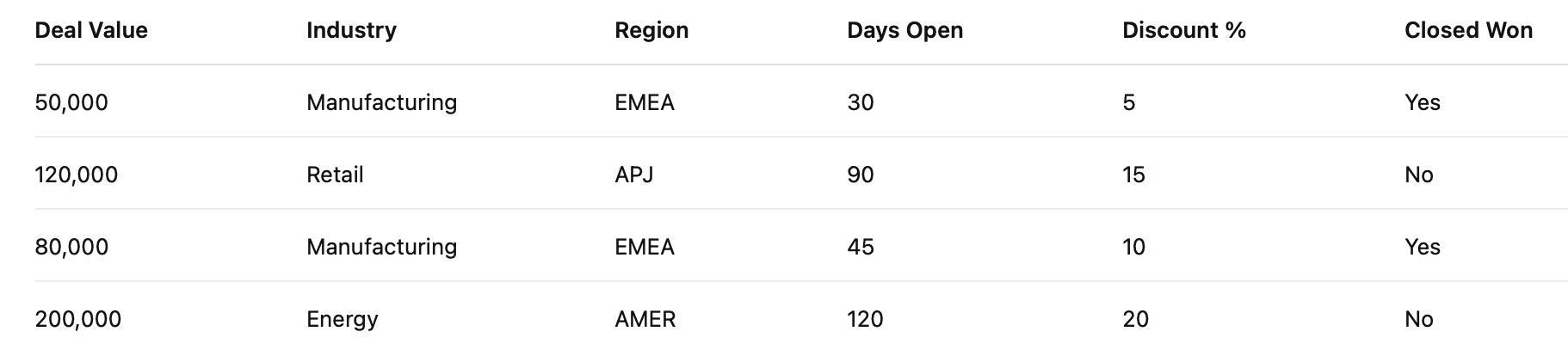
Closed Won is the outcome you already know for past deals.
Step 2: What you ask SAP RPT-1
You simply tell RPT-1:
“Here are some past deals. Learn the pattern and predict Closed Won for new deals.”
Important difference:
- No model training
-
No feature engineering
-
No Python notebooks
Just examples in a table.
Step 3: New deal (prediction)
Now you add a new row without the result:

You send this to SAP RPT-1.
Step 4: RPT-1 output
RPT-1 responds with something like:
Prediction: Closed Won = Yes
Confidence: 78%
That’s it.
No training cycle. No redeployment.
Just in-context learning on relational data.
SAP-RPT-1 vs Other AI Models (LLMs and Traditional ML)
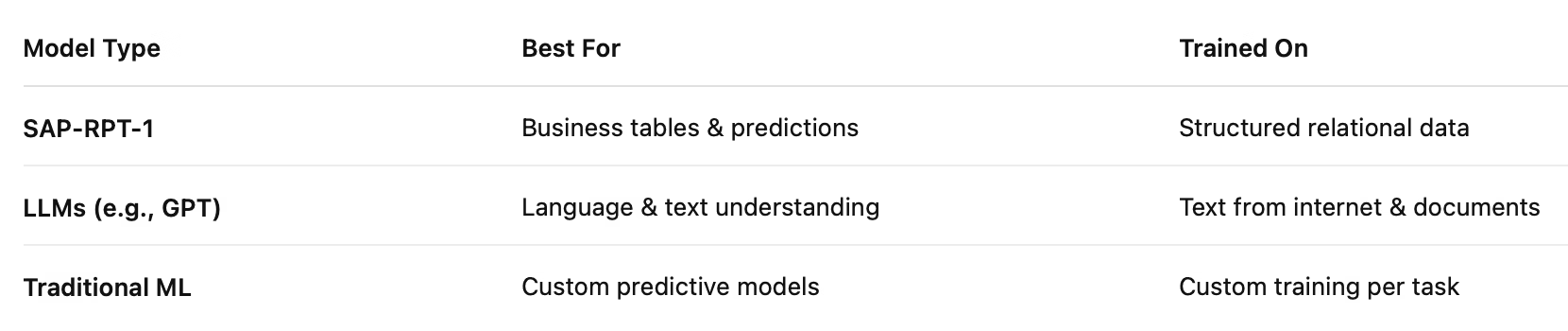
Bottom line:
LLMs like ChatGPT can talk about your tables.
SAP-RPT-1 can predict from your tables.
 Stand Out with
SAP AI Skills
Everyone has SAP experience.
Very few have SAP AI skills.

SAP AI Skills
Very few have SAP AI skills.
Two Model Variants
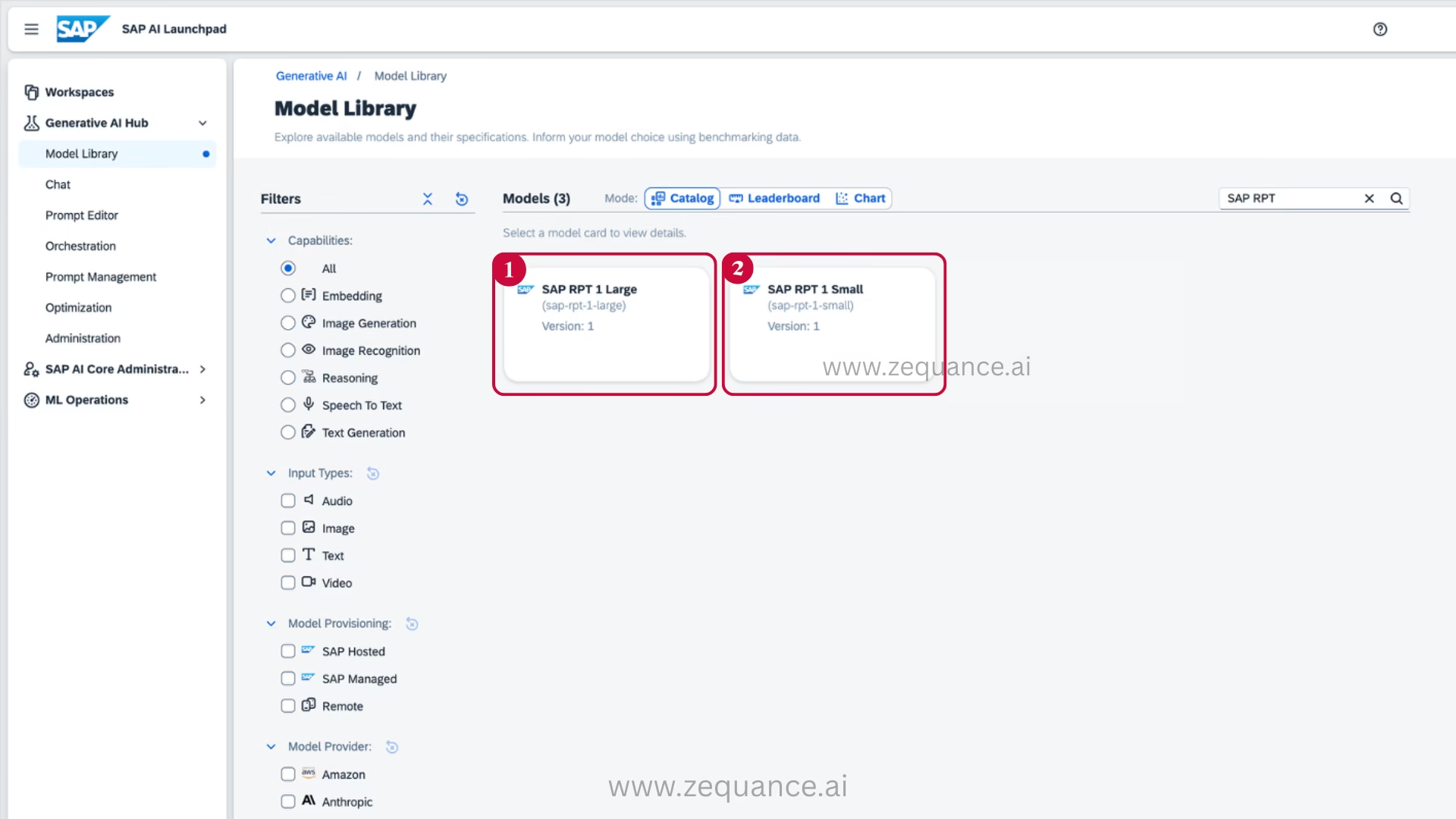
SAP offers two versions of RPT-1 to fit different use case complexities:
SAP-RPT-1-small
- Best for medium-complexity problems where low latency is crucial
- Accepts up to 8,000 context rows and 64 columns
- Many predictions complete in under 1 second
- Ideal starting point for most use cases
SAP-RPT-1-large
- Built for highly complex enterprise scenarios with many influencing columns
- Accepts up to 64,000 context rows and 256 columns
- Predictions typically complete in 2-8 seconds
- Designed for highest accuracy on complex problems
SAP recommends starting with 500-2000 rows for the small variant and 4000-8000 rows for the large variant as a balanced trade-off between quality, latency, and cost.
How to Get Started
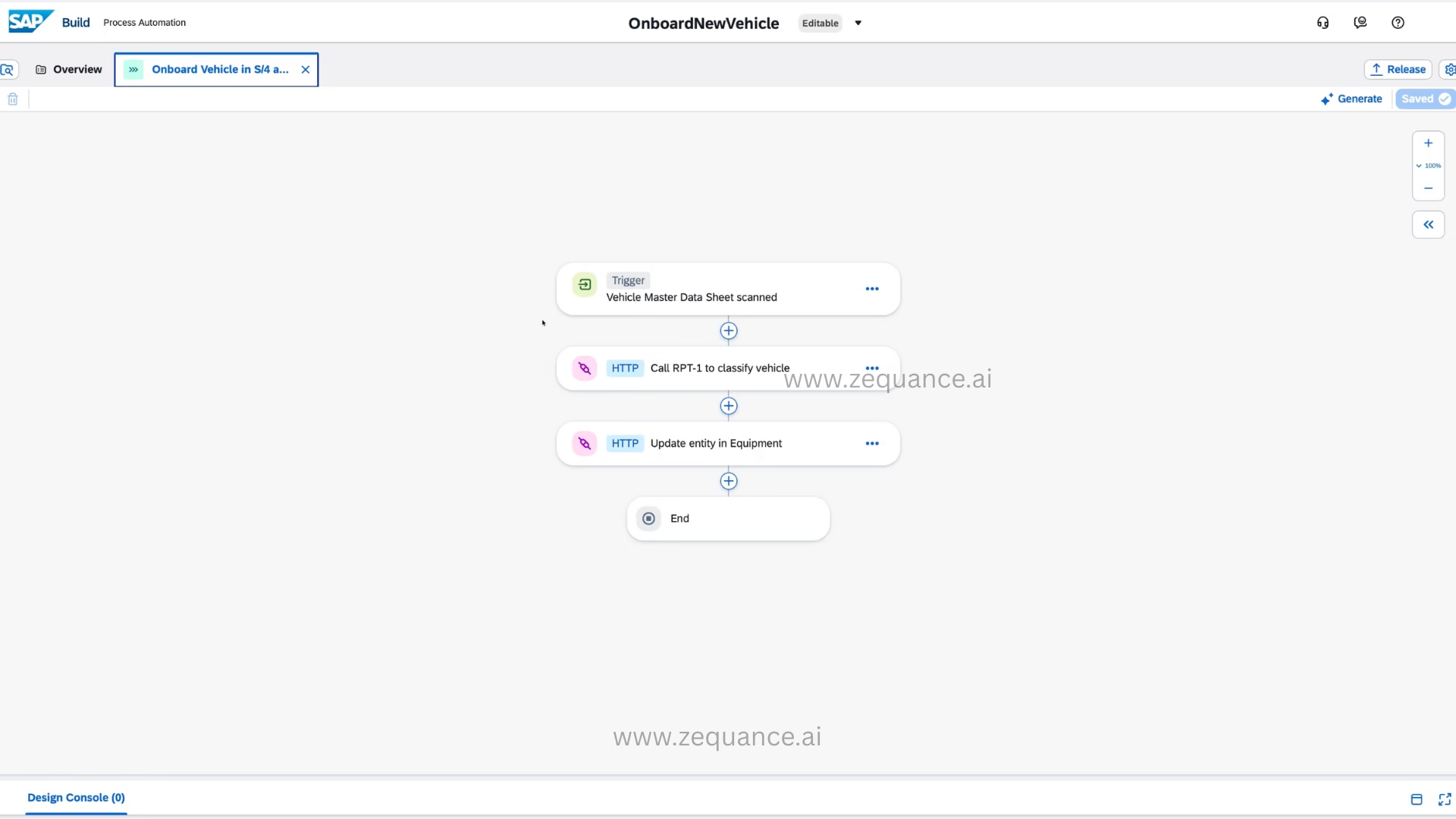
SAP provides multiple pathways to start using RPT-1:
1. Deploy via SAP AI Launchpad
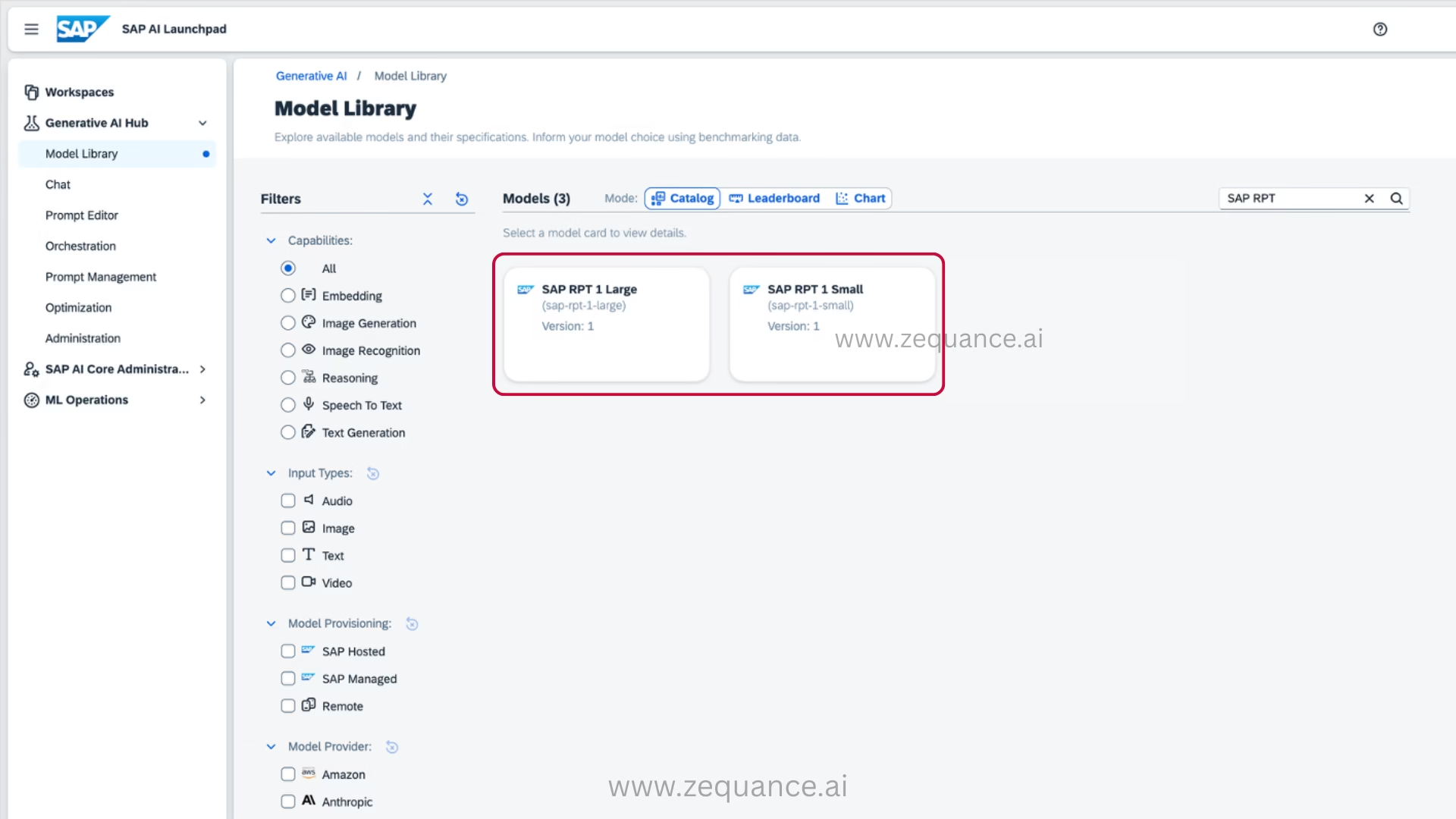
Find the model in the Model Library within Generative AI Hub, click Deploy, and within minutes you’ll have a deployment URL ready for predictions.
2. Use the API
Send POST requests to the /predict endpoint with your data payload. Mark fields you want predicted with a placeholder like [PREDICT], and the model returns predictions with confidence scores.
3. Explore the Sample Collection
SAP has prepared a comprehensive collection with sample requests you can customize with your own context data.
Prerequisites:
- SAP AI Core instance under the extended plan
- SAP AI Launchpad (recommended) for streamlined deployment and monitoring
Finding the Right Context
A common question: “I have millions of rows of historical data. How do I use a model with a limited context window?”
Here’s the surprising answer: for most use cases, it doesn’t matter much.
SAP’s experiments show that picking 2,000 rows at random from 200,000 rows of labeled data is often sufficient to achieve best-in-class performance. The model’s efficient design and large-scale pre-training mean it can learn patterns from a small, representative sample that would require millions of rows for traditional ML models.
Edge cases where you should be more thoughtful:
- Classification with many target classes → use stratified sampling to ensure all classes are represented
- Strong data drift → sample with a bias toward recent data
But for most scenarios: start simple. Random sampling works remarkably well.
The Big Picture
SAP-RPT-1 flips enterprise AI on its head.
Instead of:
- Hiring data scientists
- Spending months on feature engineering
- Training and tuning complex models
- Deploying ML pipelines
You now:
- Show the model your business tables
- Mark what you want to predict
- Get predictions — fast and simple
This democratizes AI for business users. If you have structured data in SAP (and who doesn’t?), you now have access to enterprise-grade predictions without needing to become a machine learning expert.
What’s Next
SAP is continuously improving the developer experience around RPT-1, with upcoming enhancements including:
- Better tooling for context selection integrated into your data landscape
- SDKs allowing developers to integrate the model with just a few lines of code
- Expanded use case templates and sample implementations
The model is generally available now through SAP AI Core and SAP Generative AI Hub.
Key Takeaway
LLMs like OpenAI GPT can talk about tables.
SAP-RPT-1 can predict from tables.
If your business runs on structured data — and most do — SAP-RPT-1 represents a fundamental shift in how accessible AI predictions can be. No training. No complexity. Just context and predictions.
The future of enterprise AI isn’t about building more complex models.
It’s about making predictions as simple as showing examples.
SAP-RPT-1 makes that future available today.

Alma TA is SAP AI Solutions Director at Zequance.AI, specializing in SAP Business AI, Joule, AI Core, and generative AI on SAP BTP. Drawing on her background in data science and enterprise analytics, she turns complex SAP AI concepts into practical guidance for consultants, architects, and business leaders.