Generative AI on SAP BTP: The Architecture Choices You Need to Understand
If you’ve looked at SAP’s Generative AI on BTP reference architecture, you’ve probably had this reaction:
“Why do we need so many components just to use AI?”
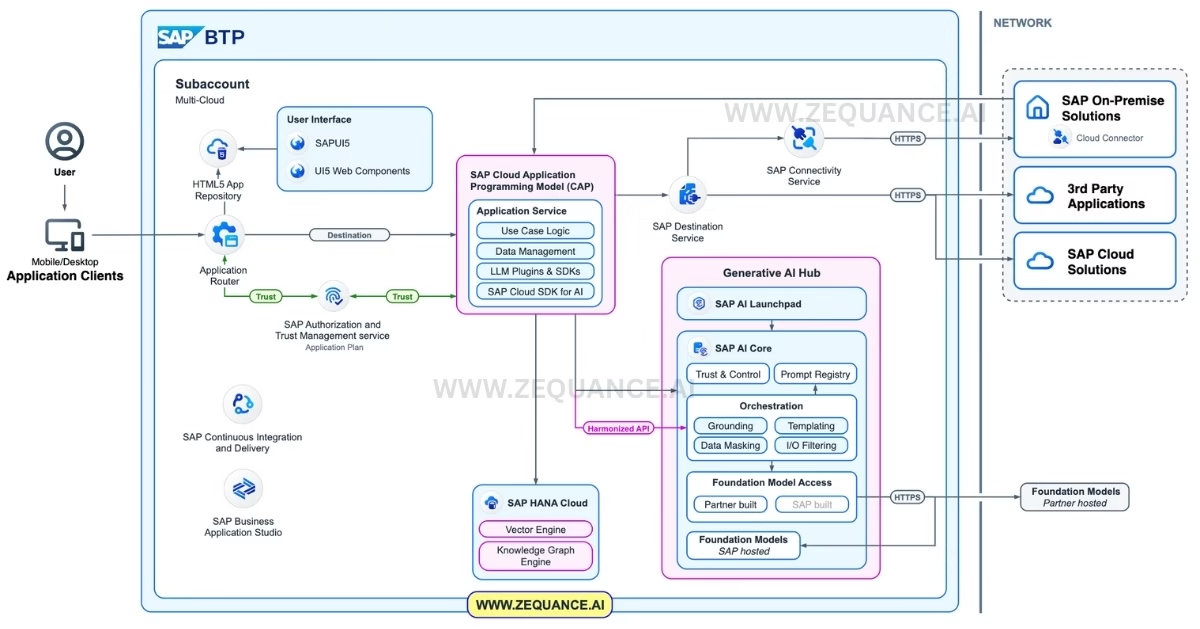
- CAP (Cloud Application Programming Model)
- SAP AI Core
- Generative AI Hub
- HANA Cloud Vector Engine
- Knowledge Graph Engine
- Cloud Foundry / Kyma runtimes
At first glance, it feels overwhelming. But here’s the truth: This isn’t accidental complexity. It’s enterprise-grade AI by design.
Let me break down why each piece exists and how they work together to create production-ready AI systems.
1. CAP: The Brain of Your Business Logic
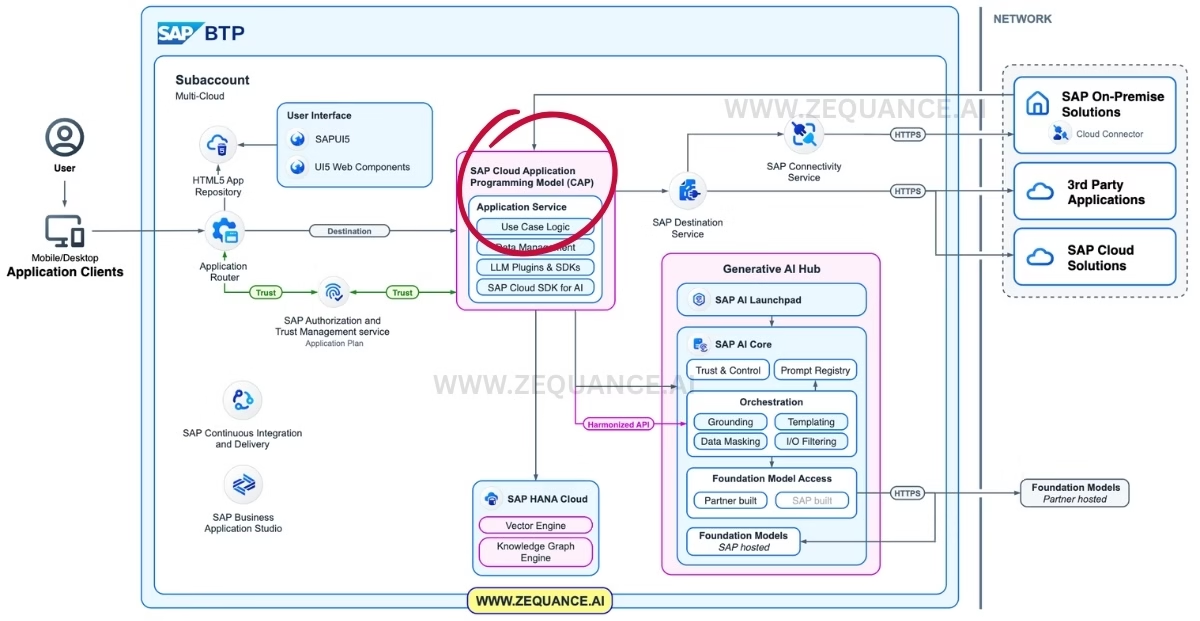
The SAP Cloud Application Programming Model (CAP) is where your enterprise rules live.
Here’s the key insight: AI doesn’t replace business logic — it augments it.
CAP serves as the central hub that:
- Orchestrates workflows and application logic
- Applies domain-specific business rules
- Decides when and how AI gets involved
- Integrates with SAP solutions (cloud and on-premise)
- Manages data sources like SAP HANA Cloud
- Connects to third-party applications
Think of CAP as the conductor of an orchestra. It ensures AI plays its part at the right time, in harmony with your existing business processes.
Supported languages: Java (Spring Boot), JavaScript, and TypeScript (Node.js)
What this means for you: AI stays inside governed business processes, not bolted on as an afterthought or a standalone chatbot.
2. Generative AI Hub: Not Just an LLM Gateway
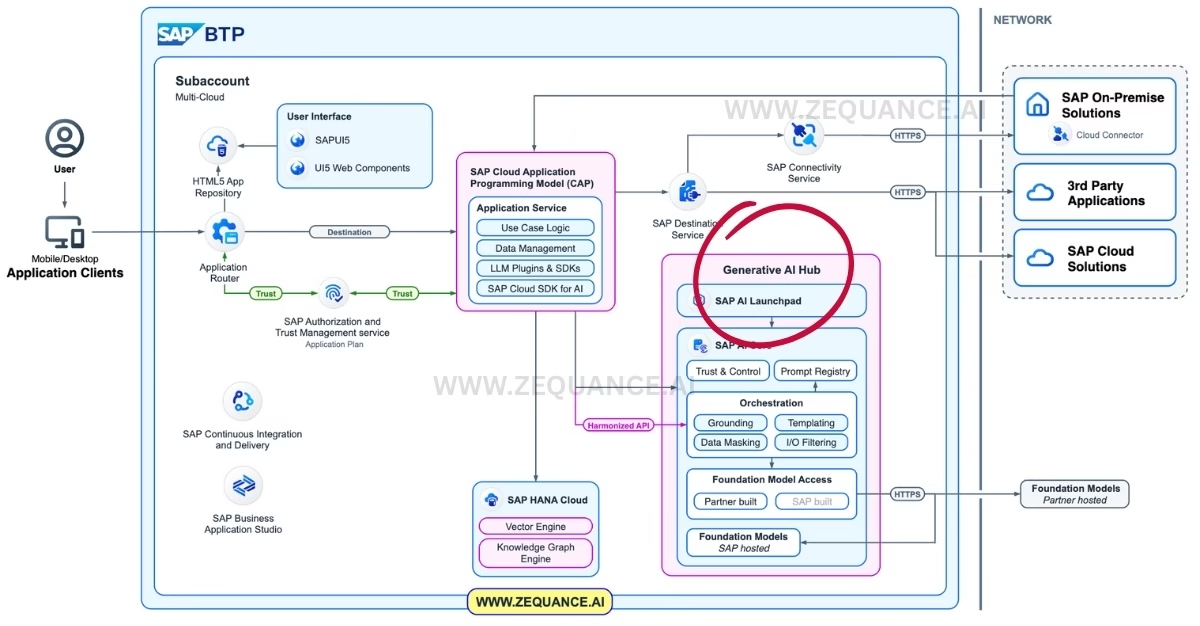
The Generative AI Hub is SAP’s control plane for Generative AI. It’s easy to think of it as “just an API to ChatGPT,” but it’s so much more.
Here’s what it actually provides:
Multi-Model Access
- Foundation models from SAP-hosted infrastructure
- Models from partners: Microsoft Azure, Google, AWS
- Standardized APIs across all providers
What This Solves
- Vendor independence – No hard lock-in to a single provider
- Model flexibility – Choose the right model for each use case
- Central orchestration – Manage all AI use cases from one place
Advanced Capabilities
- Prompt Registry – Manage prompt lifecycles centrally
- Prompt Optimization – Refine prompts against target datasets
- Enterprise controls – Governance around AI usage
The Generative AI Hub isn’t just about accessing models. It’s about controlling how AI works in your organization.
3. Orchestration: Where Enterprise AI Becomes Safe AI
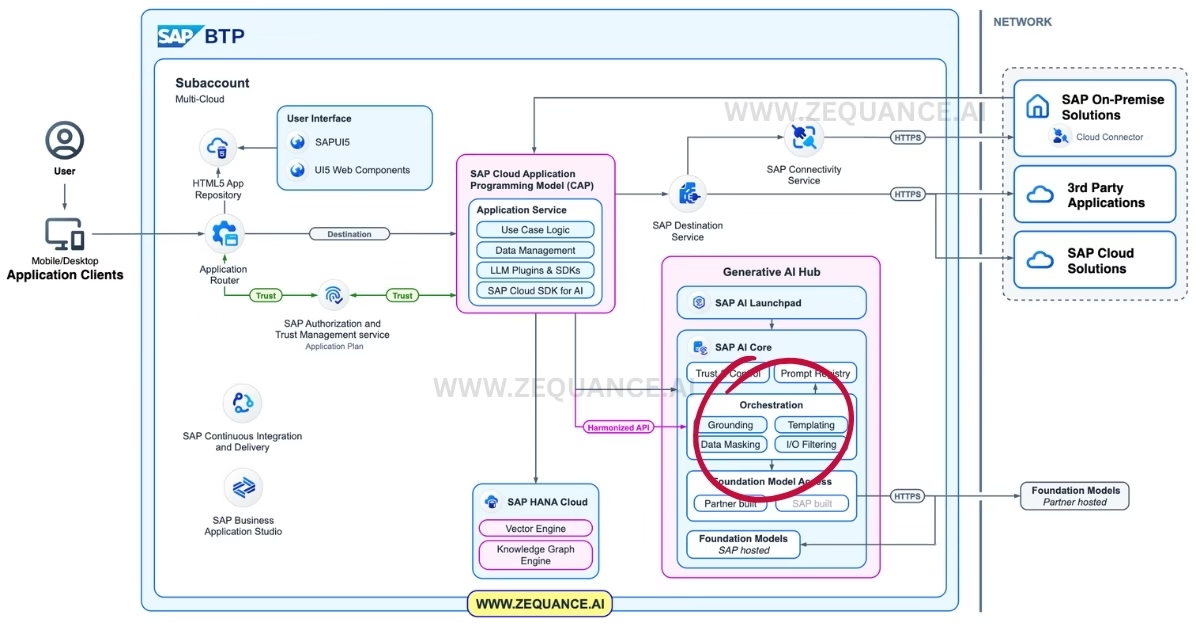
This is the part many people overlook — and it’s arguably the most important.
Orchestration is what makes SAP’s AI suitable for regulated environments like finance, HR, and supply chain.
Here’s what Orchestration brings to the table:
Grounding
Integrates external, contextually relevant, domain-specific, or real-time data into AI processes. Your AI doesn’t just generate text — it answers with your business data backing it up.
Templating
Compose prompts with placeholders that get filled during inference. This ensures consistency at scale.
Translation
Automatically translate LLM prompts into chosen target languages. Build global-ready AI workflows from day one.
Data Masking
Anonymize or pseudonymize data before it’s processed by the AI model. In cases of pseudonymization, masked data in the response gets unmasked automatically.
Content Filtering
Restrict the type of content passed to and from the AI model. Responsible AI by default.
The Pipeline Approach
Different orchestration modules combine into a pipeline executed with a single API call. The response from one module becomes input for the next, with execution order centrally defined.
Bottom line: This is why SAP AI works in environments where compliance, privacy, and auditability aren’t optional.
4. HANA Cloud: Turning AI from “Smart” into “Relevant”
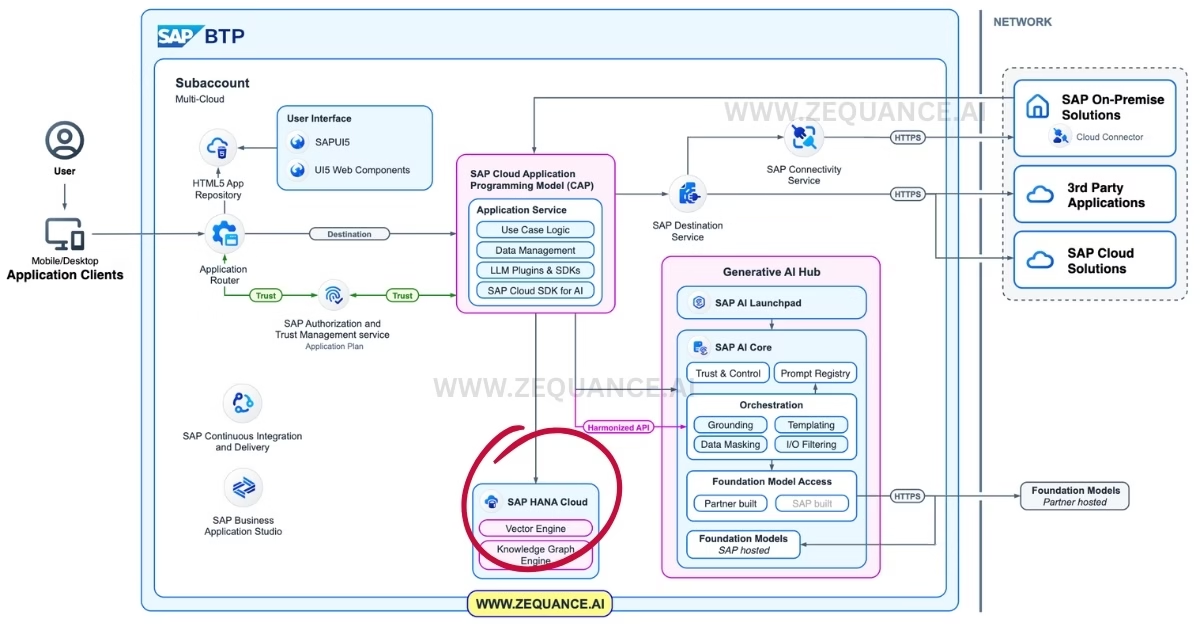
LLMs are powerful — but they’re stateless. They don’t remember your business data. They can’t reason about relationships in your organization.
That’s where SAP HANA Cloud comes in, with two game-changing engines:
Vector Engine: Giving AI Memory
The Vector Engine manages unstructured data (text, images) as high-dimensional embeddings.
What this enables:
- Semantic search – Find documents by meaning, not just keywords
- Similarity matching – “Show me contracts similar to this one”
- Context-aware responses – AI that understands your business context
- Retrieval Augmented Generation (RAG) – Combine LLMs with your private business data
Key benefit: Multi-model database architecture. Vector storage sits alongside relational, graph, spatial, and JSON data — all in one place.
Knowledge Graph Engine: Giving AI Reasoning
The Knowledge Graph Engine handles semantically connected relationships.
What it supports:
- RDF and SPARQL – Expose relational data as knowledge graphs
- SQL and SPARQL interoperability – Complex queries that leverage both
- Logical inference – AI that can reason about your business
What this enables:
- Improved decision-making with logical formality
- Interconnected corporate knowledge that powers AI applications
- Enhanced data understanding for complex business queries
Together, Vector Engine + Knowledge Graph = Enterprise AI that’s both smart AND relevant.
5. Multiple Runtimes: Flexibility, Not Confusion
Why does SAP support both Cloud Foundry and Kyma?
Because different AI workloads have different needs.
Cloud Foundry Runtime
- Best for: Traditional CAP services
- Polyglot application development
- Proven, stable platform
Kyma Runtime
- Best for: Event-driven extensions
- Containerized microservices
- Kubernetes-native scalability
- Serverless functions
The principle: You deploy AI where it fits best — not where the platform forces you.
This architectural flexibility means you can start with Cloud Foundry and evolve to Kyma as your needs grow, or run both simultaneously.
Common AI Patterns Enabled by This Architecture
The reference architecture isn’t just components — it enables real AI patterns:
Basic Prompting
Fundamentals of interacting with foundation models through the Generative AI Hub.
Semantic Search & Embeddings
Context-aware, meaning-based search using HANA Cloud’s Vector Engine.
Retrieval Augmented Generation (RAG)
Ground AI responses with actual documents and business data.
AI Agents
Autonomous, adaptive execution of complex enterprise processes.
Agent-to-Agent Interoperability (A2A)
Multiple agents collaborating using the A2A protocol.
Agents for Structured Data
Natural language queries into enterprise data for analytics.
Multi-Tenancy
Support multiple customers/tenants with data isolation and security.
The Real Takeaway
SAP is not building AI demos. SAP is building AI infrastructure for real business systems.
This architecture ensures:
- AI respects authorization and access controls
- AI understands business context and semantics
- AI scales across tenants securely
- AI remains explainable and auditable
- AI integrates with existing SAP investments
That’s why Generative AI on SAP BTP looks the way it does.
Final Thoughts
When you first see this architecture, it looks complex. But each component solves a specific enterprise challenge that you’d otherwise have to build yourself:
- How do I access multiple AI models without vendor lock-in? → Generative AI Hub
- How do I make AI understand my business data? → Vector Engine
- How do I ensure AI is safe and compliant? → Orchestration
- How do I integrate AI with existing processes? → CAP
- How do I reason over business relationships? → Knowledge Graph Engine
This isn’t complexity for its own sake. It’s the difference between a proof-of-concept and a production system.

Alma TA is the SAP AI Solutions Director at Zequance.AI, specializing in SAP Business AI, SAP Joule, SAP AI Core, and Generative AI on SAP BTP. With a background in data science and enterprise analytics, she helps SAP professionals and organizations understand how SAP’s AI architecture works in real-world implementations.
Her work focuses on breaking down complex topics such as SAP RPT-1, Retrieval-Augmented Generation (RAG), SAP AI agents, and enterprise AI governance into practical, implementation-ready insights.
Alma regularly publishes in-depth technical breakdowns of SAP’s AI strategy and architecture, helping consultants, architects, and decision-makers design smarter SAP AI solutions.