SAP Joule Meets SAP Ariba: What Consultants Really Need to Know
As SAP rolls out Joule across its Line of Business applications, consultants working in procurement are encountering a consistent question from their clients: “How does Joule actually work with SAP Ariba, and why are there so many additional components involved?” This is a fair question, especially when many AI assistants appear to work with a simple on-off switch.
This post focuses on the architectural reasoning behind Joule’s integration with SAP Ariba. Rather than walking through the technical setup steps, we’re going to explore why each component exists and what problem it solves. Understanding this foundation will help consultants have more informed conversations with clients and make better design decisions during implementation.
What Joule Actually Brings to SAP Ariba
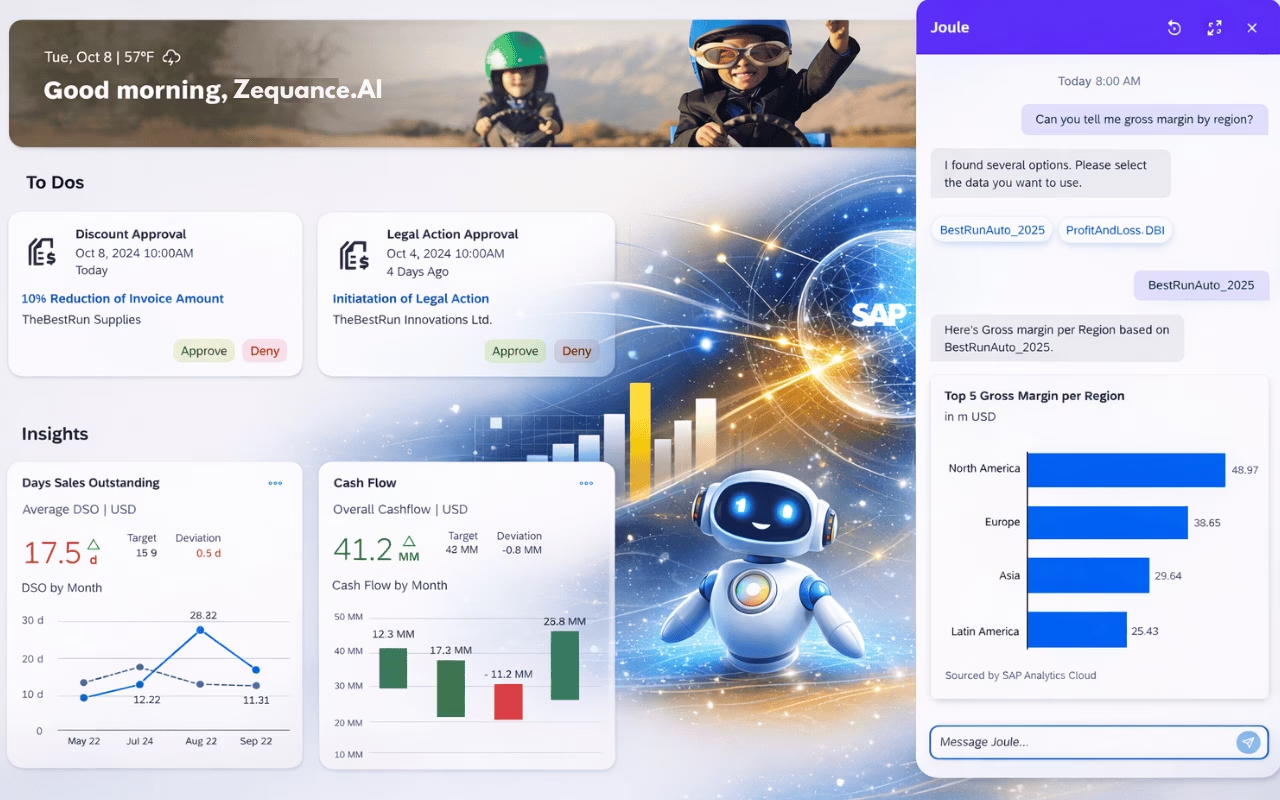
At its core, Joule adds a conversational AI layer on top of procurement operations. This means users can interact with their procurement systems more naturally, asking questions like “Show me indirect spend for Q4 by supplier” or issuing commands such as “Create a sourcing event for office supplies.”
However, for Joule to answer these requests securely and accurately, it needs to deeply understand several dimensions of the Ariba environment. It must know what data exists, what applications are available, what roles govern access, and which APIs expose functionality. This understanding doesn’t emerge automatically when you flip a switch. Instead, it requires a carefully orchestrated architecture that connects multiple SAP systems. The reference architecture in the setup guide reveals why each piece matters.
The Identity Foundation: Knowing Who’s Asking
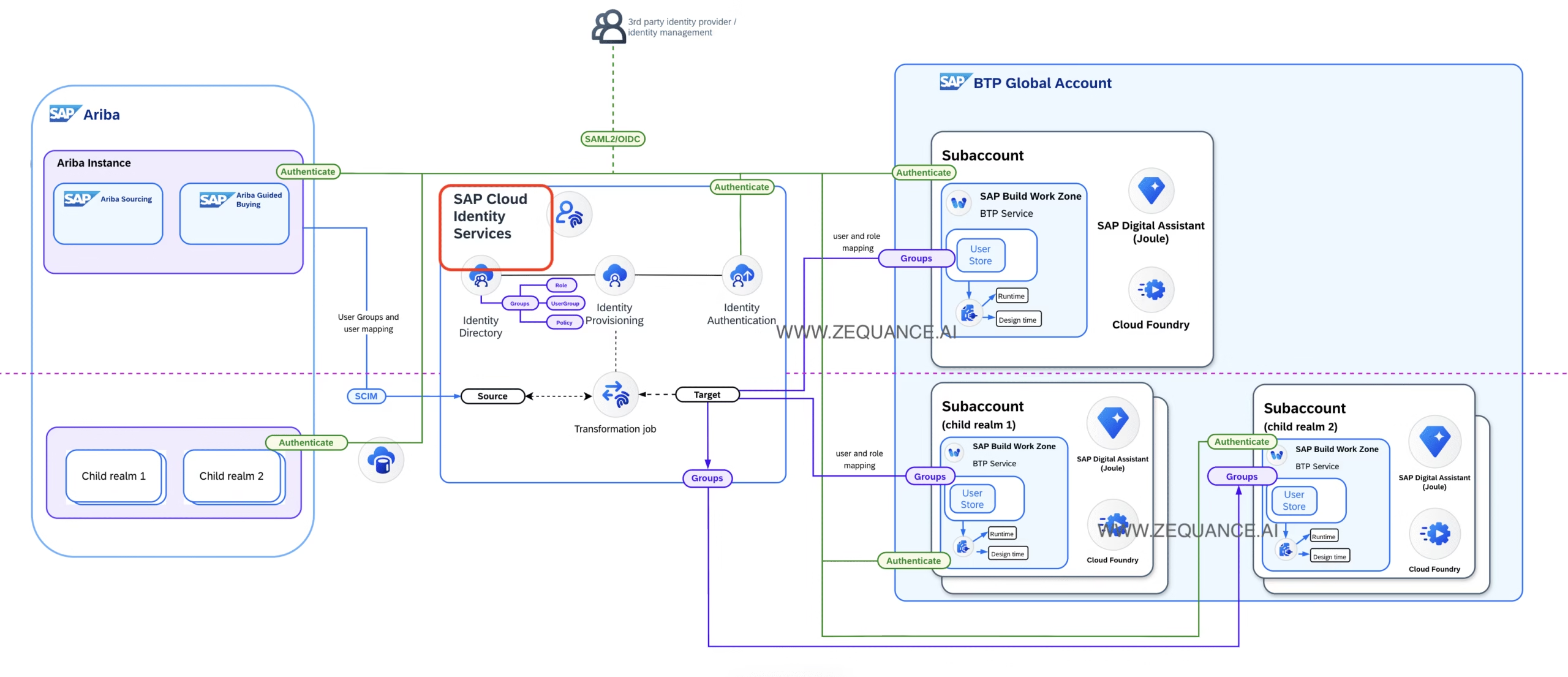
Before Joule can answer any question or perform any action, it must resolve three fundamental questions: Who is the user making this request? What are they allowed to see within Ariba? Which Ariba functions do they have permission to access?
This is where SAP Cloud Identity Services becomes the cornerstone of the entire architecture. The combination of Identity Authentication Service (IAS) and Identity Provisioning Service (IPS) creates a unified identity foundation that spans across SAP systems. Think of IAS as the authentication layer that verifies users are who they claim to be, while IPS ensures that user profiles, group memberships, and role assignments stay synchronized across all connected systems.
The reason this matters so much for Joule is that the AI must respect the same security boundaries that exist in your Ariba system. If a user doesn’t have permission to view supplier contracts in Ariba, Joule cannot reveal that information either. This identity foundation ensures Joule operates as an extension of your existing security model rather than creating a backdoor around it.
What makes this particularly important in Ariba environments is that procurement data is inherently sensitive. Users in different departments or regions may have very different permissions. A buyer in Europe might see certain suppliers and contracts that a buyer in North America cannot access. Joule needs to understand these boundaries for every single conversation and action.
Why SAP Build Work Zone Enters the Picture
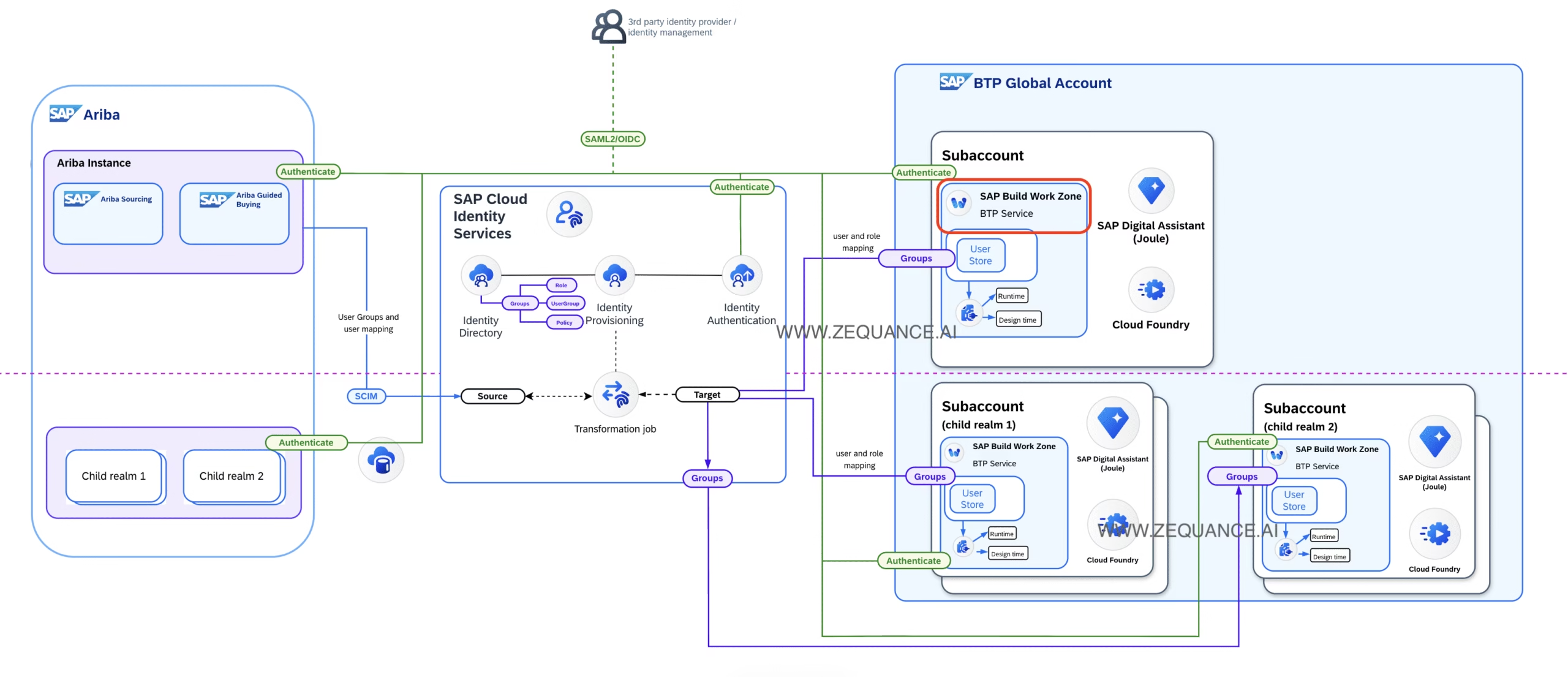
One of the most common questions consultants encounter is this: “Why do we need Work Zone at all? Shouldn’t Joule be able to talk directly to Ariba?” On the surface, this seems like a reasonable question. After all, Joule is meant to simplify things, not add more systems to the mix.
To understand why Work Zone is essential, think about what happens when a user asks Joule a question. The AI doesn’t just need to retrieve data; it often needs to guide users to the right place, show them the relevant applications, or help them navigate to specific functions. Work Zone serves as Joule’s enterprise map, containing information about which applications exist, how they’re organized, what roles can access them, and how users navigate between different procurement functions.
Without this map, Joule would be like a knowledgeable assistant who knows all the facts but can’t tell you which door to go through or which form to fill out. Work Zone provides the contextual navigation layer that allows Joule to say things like “I found three open purchase requisitions for you, would you like me to open the approval screen?” and then actually take the user to the right place.
Furthermore, Work Zone acts as the integration layer that brings together content from multiple systems. In many organizations, procurement involves more than just Ariba. There might be S/4HANA for financial data, SuccessFactors for employee information, or other applications that need to work together. Work Zone creates a unified experience where Joule can orchestrate across these boundaries, pulling together information that spans multiple systems to give users a complete picture.
The Content Brain: Understanding What’s Possible Through CDM
Here’s where the architecture gets particularly interesting from a consultant’s perspective. Joule doesn’t simply guess what it can or cannot do within Ariba. Instead, Ariba exposes its capabilities through something called the Common Data Model, or CDM. These CDM APIs essentially tell Joule everything it needs to know about what exists in your Ariba environment and what actions are possible.
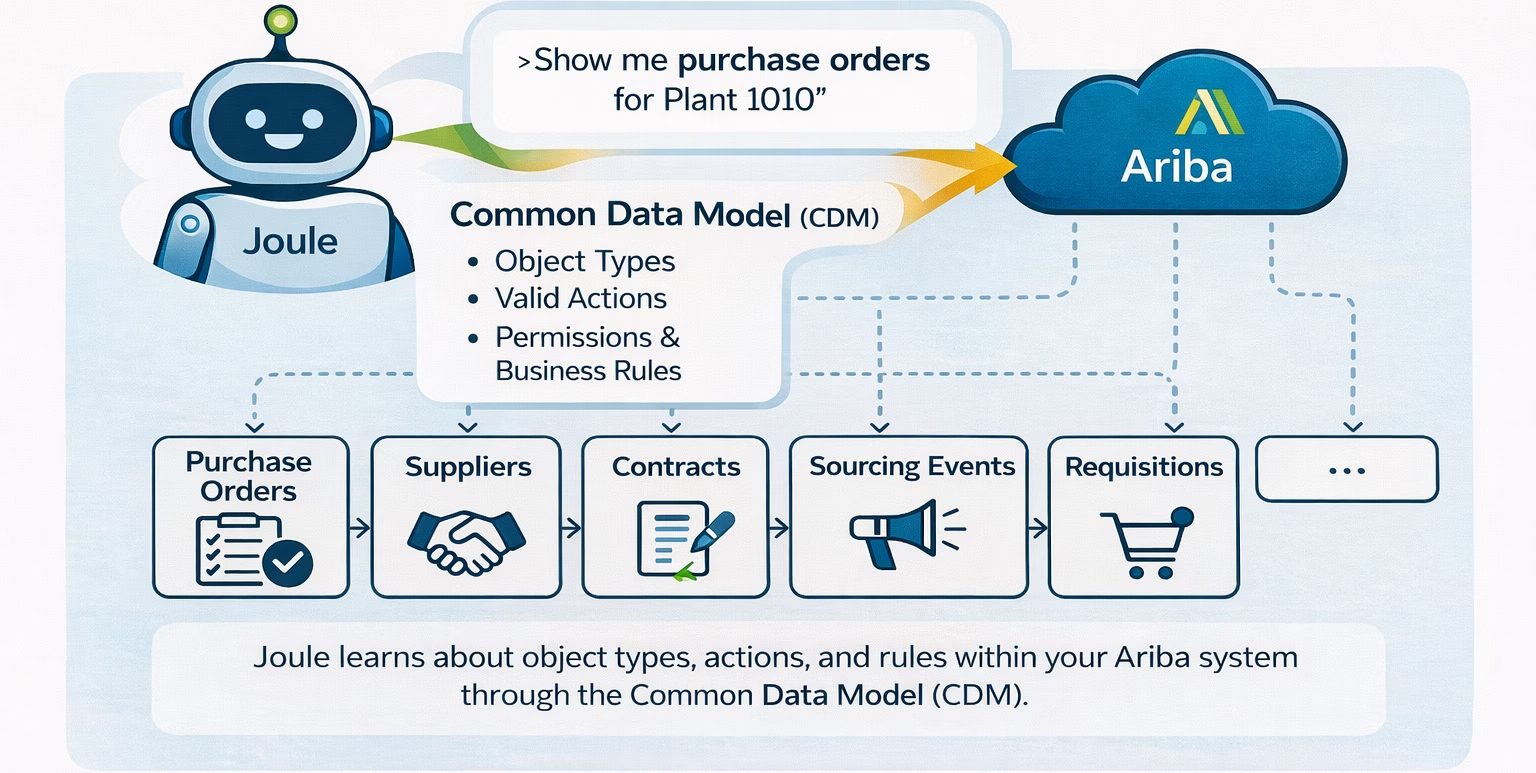
Think of CDM as Ariba’s way of describing itself to the AI. Through these APIs, Joule learns about the objects that exist in your procurement world: purchase orders, suppliers, contracts, sourcing events, requisitions, and so on. But CDM goes much deeper than just listing object types. It also communicates what actions Joule can perform on each object type, what roles or permissions are required to perform those actions, and how to interpret the business metadata associated with each object.
This is how Joule transforms from a generic chatbot into a role-aware, policy-respecting procurement assistant. When a user asks to create a purchase order, Joule doesn’t just blindly attempt to call an API. Instead, it checks the CDM to understand whether this user’s role allows purchase order creation, what fields are required, what validation rules apply, and what business rules govern the process in your specific Ariba configuration.
The CDM approach means that Joule adapts to your organization’s procurement processes rather than forcing you to adapt to a predetermined AI model. If your organization has customized sourcing workflows or specific approval hierarchies, CDM allows Joule to understand and work within those parameters. This is fundamentally different from a simple chatbot that provides canned answers to predetermined questions.
Connecting the Systems: Why Destinations Matter
When Joule needs to retrieve procurement data or execute a task on behalf of a user, it must call Ariba APIs in a secure and auditable way. This is where BTP Destination Services come into play. From a consultant’s perspective, destinations might seem like just another configuration step, but they serve a critical architectural purpose.
Every interaction between Joule and Ariba flows through these destinations, which enforce several layers of security and governance. Each destination uses HTTPS-secured connections to ensure data travels safely across the network. OAuth-based authentication verifies that the systems are authorized to communicate with each other. Role-based authorization ensures that even system-to-system calls respect user permissions. And audit logging captures every interaction for compliance and troubleshooting purposes.
This architecture means that when a user asks Joule to “show open purchase orders,” the resulting action involves multiple secure steps. Joule authenticates the user through IAS, determines their roles and permissions, consults CDM to understand which purchase order APIs are available, constructs an appropriate API call, sends it through a secure destination to Ariba, receives the filtered results based on the user’s authorization level, and then presents the information in natural language.
The setup guide documents separate destinations for design-time and runtime operations, as well as distinct destinations for different Ariba modules like Sourcing and Procurement. This separation allows for fine-grained control over how different parts of your procurement landscape connect to Joule. It also enables you to set up development, test, and production environments with appropriate isolation between them.
The AI Layer: Where Intelligence Meets Integration
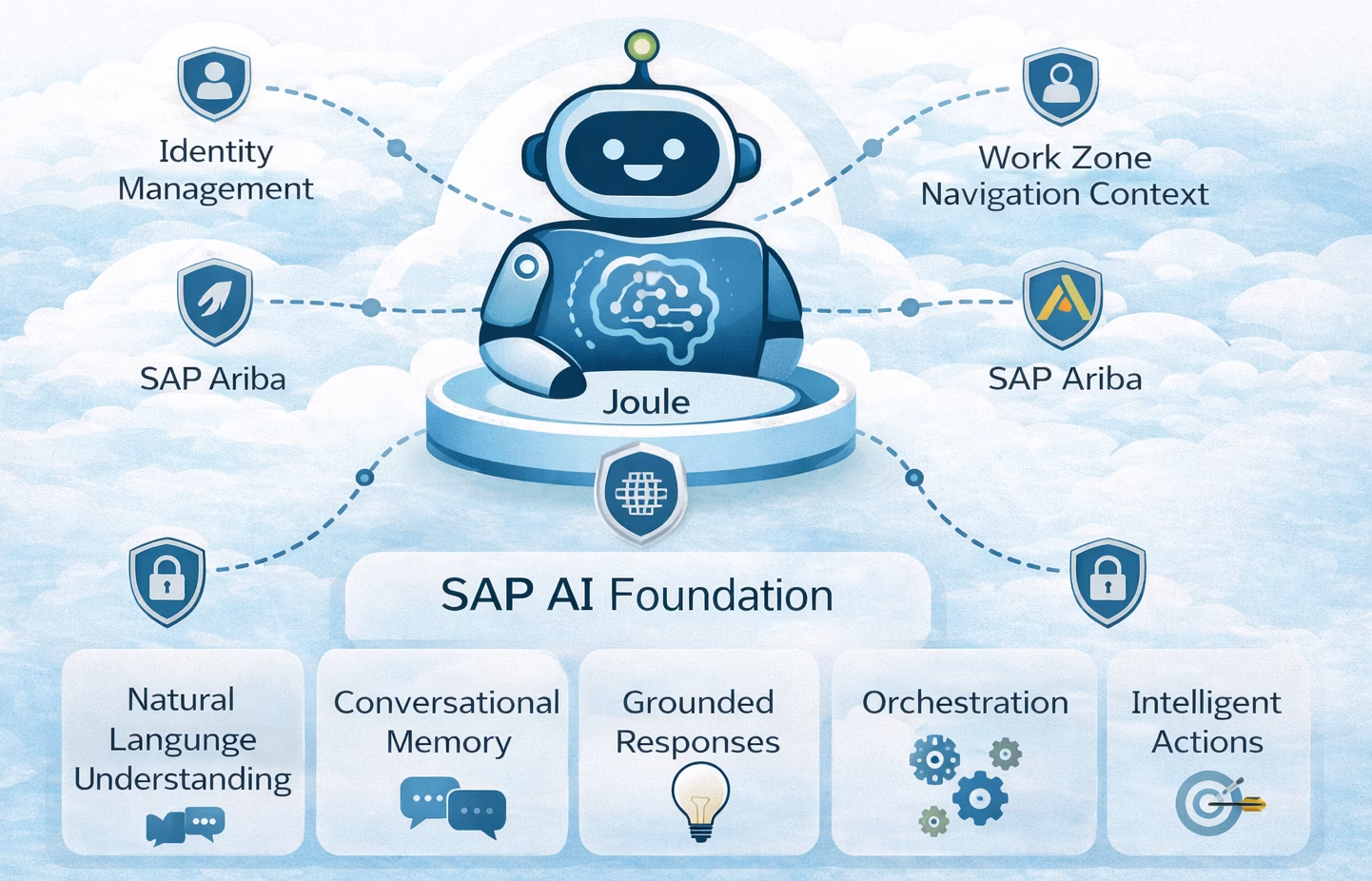
With identity management, navigation context, content understanding, and secure connectivity all in place, Joule can finally apply its artificial intelligence capabilities to become more than just a system integration layer. The SAP AI Foundation provides the underlying intelligence that allows Joule to understand natural language, maintain conversation context, generate grounded responses, and orchestrate actions across multiple SAP systems.
This is where the architecture delivers its real value to end users. Because Joule has access to properly structured identity information, it can personalize every interaction. Because it understands navigation through Work Zone, it can guide users to the right place at the right time. Because it comprehends Ariba’s capabilities through CDM, it can suggest relevant actions that respect business rules and policies. And because it connects securely through destinations, every action it takes is authenticated, authorized, and auditable.
The result is that Joule becomes an active copilot in procurement operations rather than just an information retrieval system. It can help users discover insights they might have missed, automate repetitive tasks, navigate complex approval workflows, and connect dots across different parts of the procurement process. A user might ask a simple question like “What’s our spend trend with Supplier X?” and Joule can not only retrieve the data but also notice an unusual pattern, suggest investigating specific purchase orders, and offer to create a sourcing event to renegotiate terms.
The Architecture in One View
After walking through all the moving parts, it helps to step back and see the architecture as a whole.
In simple terms, SAP Joule + SAP Ariba works because each layer answers a very specific question—and no two layers overlap in responsibility.
Identity defines who
Identity services establish who the user is and what they are authorized to see and do. Joule never invents permissions—it inherits them directly from the Ariba security model.
SAP Build Work Zone defines where
Work Zone provides the navigation and application context. It tells Joule where procurement functions live, how users move between them, and which applications are relevant at any moment.
Common Data Model defines what
CDM explains what objects exist in Ariba, what actions are possible, and which roles govern those actions. This is how Joule becomes role-aware and process-aware instead of behaving like a generic chatbot.
Destinations define how
BTP destinations handle how systems securely talk to each other — enforcing authentication, authorization, encryption, and auditability for every request Joule executes on a user’s behalf.
SAP AI Foundation defines intelligence
Only once identity, context, capability, and connectivity are in place can Joule apply AI—understanding language, maintaining context, grounding responses, and orchestrating actions across systems.
Seen this way, the architecture isn’t complex. Each component exists to ensure that Joule behaves like a trusted procurement copilot—secure, contextual, policy-aware, and enterprise-ready—rather than a standalone AI assistant bolted onto Ariba.
Why This Matters for Consultants
Understanding this architecture helps consultants in several practical ways. First, it allows you to set realistic expectations with clients about implementation complexity. Yes, there are many components, but each one serves a specific purpose in creating a secure, intelligent, and integrated experience. When clients ask “Why can’t we just turn it on?”, you can explain the architectural reasoning rather than simply pointing to a list of technical requirements.
Second, this knowledge helps you identify which existing systems and configurations in a client’s landscape can be leveraged versus which need to be built new. If a client already has IAS configured for Ariba SSO, you’re starting from a stronger foundation than if identity management needs to be set up from scratch. If Work Zone is already in use for other applications, adding Ariba content becomes more straightforward than implementing Work Zone entirely new.
Third, understanding the role of each component helps you make better design decisions about things like which subaccount structure to use, how to handle multiple Ariba realms, and how to support both parent and child realm scenarios. The architecture reveals why certain limitations exist, such as why one Joule instance connects to one Ariba realm or why child realms may need dedicated subaccounts.
Finally, this architectural understanding prepares you for conversations about the broader AI strategy in your client’s organization. Joule isn’t just about Ariba—it’s designed to work across SAP’s Line of Business applications. The same identity foundation, navigation context, and integration patterns that enable Joule in Ariba also support Joule in S/4HANA, SuccessFactors, and other SAP systems. Consultants who understand this unified approach can help clients avoid creating disconnected AI implementations and instead build toward a cohesive intelligent enterprise.
Looking Forward
As SAP continues to develop Joule and Ariba’s integration capabilities, some of the manual configuration steps documented in current setup guides will likely become automated. The architecture, however, will remain fundamentally the same because it addresses real requirements around security, integration, and intelligence. Understanding why these components exist will serve consultants well even as the implementation details evolve.
The complexity isn’t accidental or arbitrary—it reflects the reality of building AI capabilities that respect enterprise security models, integrate with existing business processes, and provide genuinely useful assistance rather than simple question-answering. For consultants helping organizations implement Joule with Ariba, the question isn’t whether all these components are necessary, but rather how to implement them in a way that delivers maximum value while minimizing ongoing maintenance overhead.

Alma TA is the SAP AI Solutions Director at Zequance.AI, specializing in SAP Business AI, SAP Joule, SAP AI Core, and Generative AI on SAP BTP. With a background in data science and enterprise analytics, she helps SAP professionals and organizations understand how SAP’s AI architecture works in real-world implementations.
Her work focuses on breaking down complex topics such as SAP RPT-1, Retrieval-Augmented Generation (RAG), SAP AI agents, and enterprise AI governance into practical, implementation-ready insights.
Alma regularly publishes in-depth technical breakdowns of SAP’s AI strategy and architecture, helping consultants, architects, and decision-makers design smarter SAP AI solutions.