Generative AI in SAP Explained: How GANs and VAEs Actually Work
SAP AI uses various AI methods, including generative AI models to empower organizations to automate processes, enhance decision-making, and generate insights from massive datasets.
Generative AI plays a significant role in SAP AI’s capacity to enhance customer experiences, and develop intelligent assistants like SAP Joule.
In this blog, we will dive into the core components of Generative AI and how these models operate – allows us to not only discuss the latest advancements but also implement them effectively in real-world SAP environments.
How Does Generative AI Work?
Generative AI allows machines to generate new, and original content. It could be text/images/videos. In the enterprise world there are many applications to it. A simple example is if you’re using the project module of SAP, A Gen AI feature within the software can generate a project summary based on the current status of the project by analysing the budget/timeline/expense/tasks etc from the system. Otherwise as a PM you’re required to create an executive summary yourself by looking at multiple screens and data. Its immensely improving the productivity.
Generative AI uses deep learning techniques like neural networks to understand patterns in large datasets. Lets understand what are the key methods Gen AI uses to create content:
1. Generative Adversarial Networks (GANs)
One of the most revolutionary approaches in generative AI is the Generative Adversarial Network (GAN). GANs consist of two neural networks working in opposition:
- Generator: This network generates new content, like an image of a face. The goal of the generator is to create data that is indistinguishable from real data.
- Discriminator: The role of the discriminator is to evaluate whether the generated content is “fake” (generated) or “real” (from real datasets). Over time, the discriminator improves at distinguishing between real and fake, forcing the generator to create more realistic data.
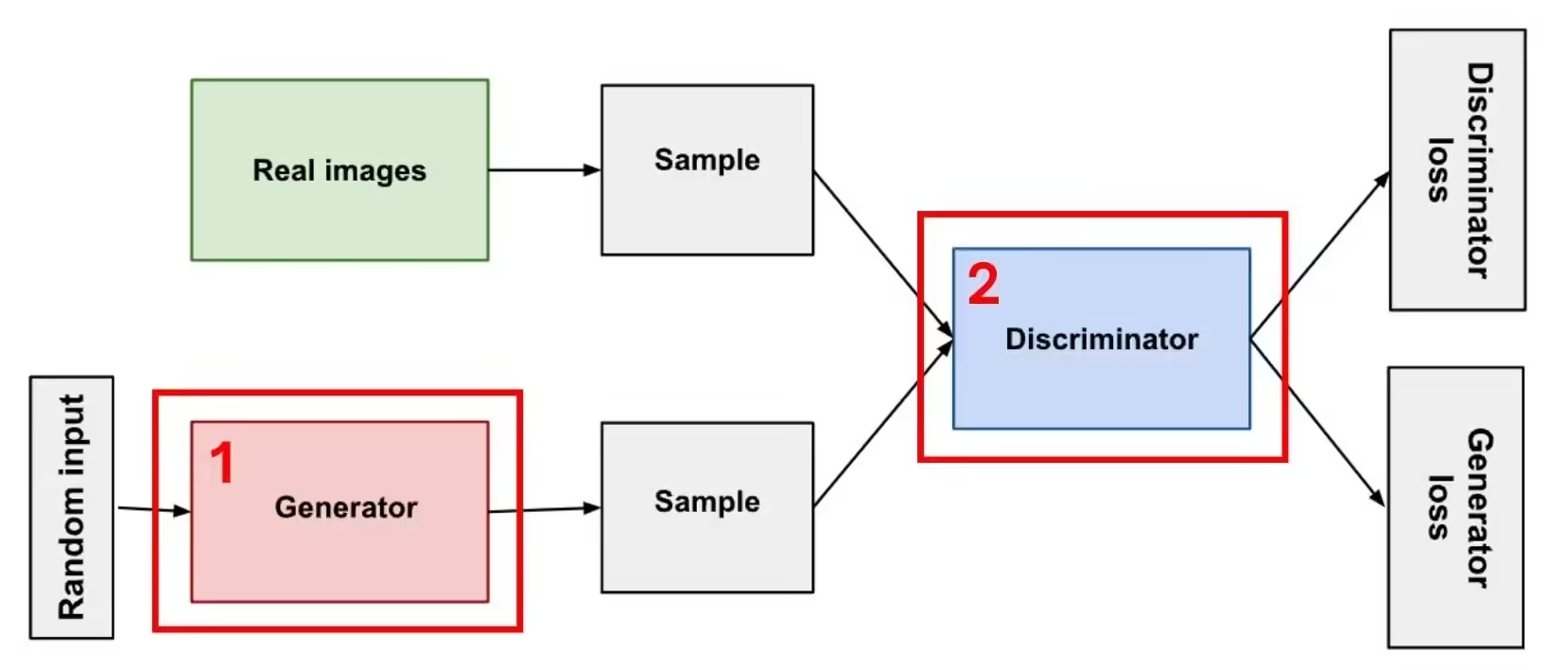
These networks are locked in a constant competition, resulting in highly realistic outputs over time. For example, in image generation, the generator creates images that the discriminator judges as fake or real until the generator becomes proficient at mimicking realistic images.
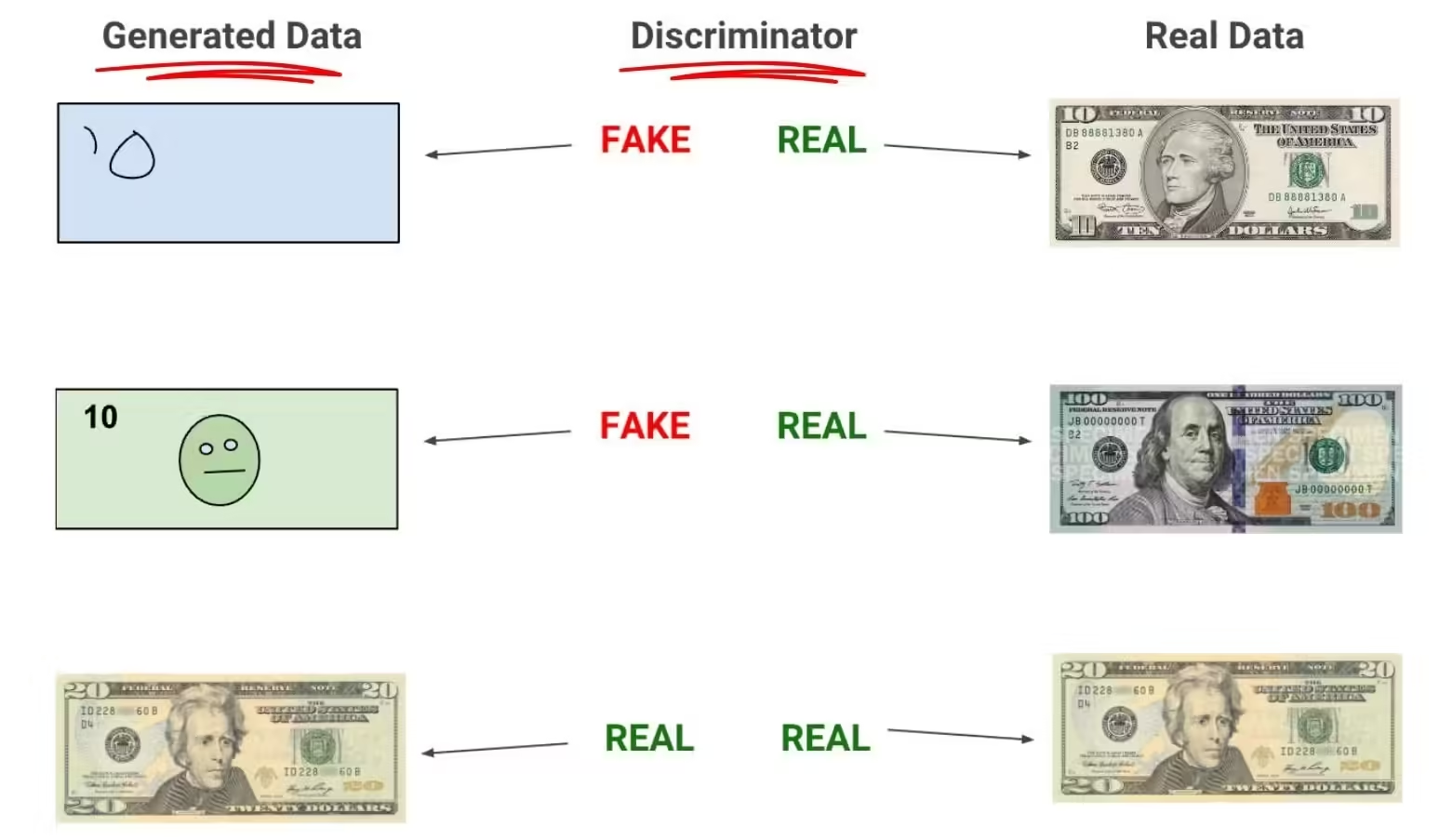
This adversarial process has been groundbreaking, especially in fields like computer vision, where GANs can generate photorealistic images, transform images into different styles, or even create entirely new ones.
Stay Ahead in the SAP + AI Era
Join 10,521+ SAP Professionals mastering SAP AI every week. No spam. Unsubscribe anytime.
2. Variational Autoencoders (VAEs)
Variational Autoencoders (VAEs) are another significant deep learning model in the generative AI landscape. Unlike GANs, VAEs focus on learning a compressed representation (or latent space) of the data. The process involves:
- Encoder: Compresses the input data (e.g., an image) into a smaller, encoded representation.
- Latent Space: A compressed version of the input that holds the essential features of the data.
- Decoder: Reconstructs the original data from the compressed representation.
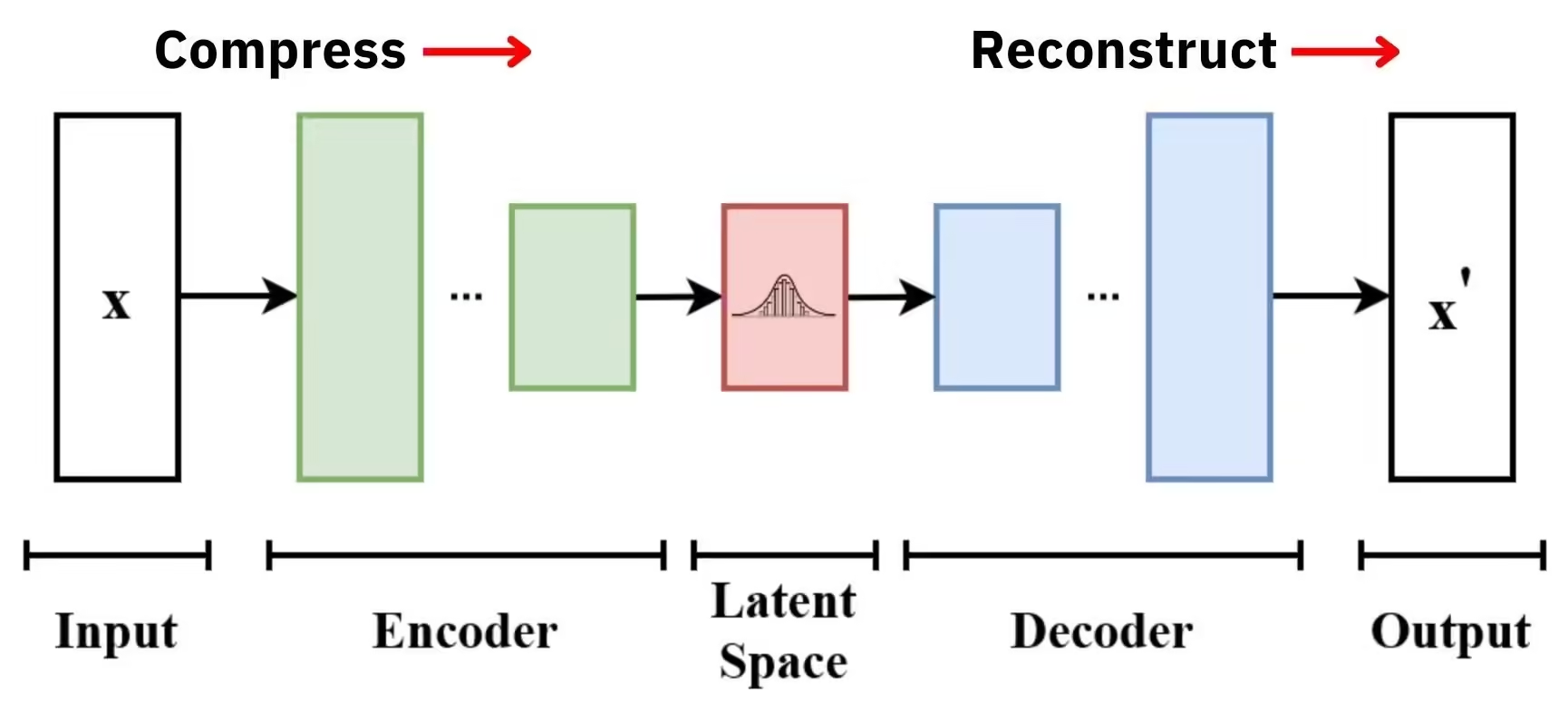
What makes VAEs unique is their ability to generate new data based on the learned latent space. For instance, after learning the core features of human faces, a VAE can generate entirely new faces that share characteristics of the faces in the dataset.
VAEs are useful in generating diverse outputs, ranging from new visual content to potential designs, and are known for their ability to interpolate between examples smoothly.

SAP AI Skills
Very few have SAP AI skills.
Conclusion
Generative AI is transforming industries by enabling machines to generate realistic, high-quality content. Techniques like GANs and VAEs are pushing the boundaries of what AI can do, making it an essential tool for enterprises.
Let’s explore together how SAP AI and generative models can drive your business forward. Keep learning!.

Alma TA is SAP AI Solutions Director at Zequance.AI, specializing in SAP Business AI, Joule, AI Core, and generative AI on SAP BTP. Drawing on her background in data science and enterprise analytics, she turns complex SAP AI concepts into practical guidance for consultants, architects, and business leaders.